Research
The Human Network Lab studies the human brain and body as one interacting network. We use the tools of network neuroscience to ask how this network reorganizes across timescales, from seconds to years, and how its reorganization relates to behaviour.
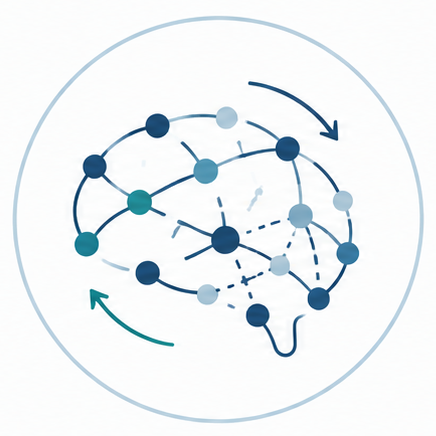
Brain network reorganization
The functional network of the human brain reorganizes across timescales: over seconds when the demands of a task change, over weeks of training, over years of development. We track how the balance between segregated and integrated processing shifts as the brain adapts. We ask how this flexibility relates to behaviour, and whether fast changes during a task foreshadow the slower ones that come with learning.
network neuroscience · neuroplasticity · modularity · integration and segregation · learning and training · time-varying dynamics · network geometry
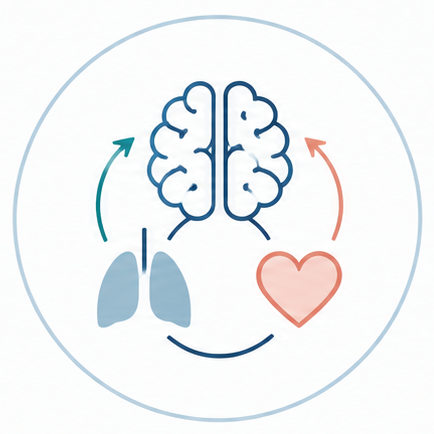
Brain–body interaction
The brain and the body regulate each other continuously: heartbeat and breathing set rhythms that neural activity follows, and the brain in turn adjusts them to the demands of the moment. We treat the two as a single network and measure the coupling between neural and bodily signals in the same way as the coupling between brain regions. We ask how this coupling changes with attention and effort, and how it differs between people.
interoception · cardiac and respiratory coupling · autonomic dynamics · embodied cognition
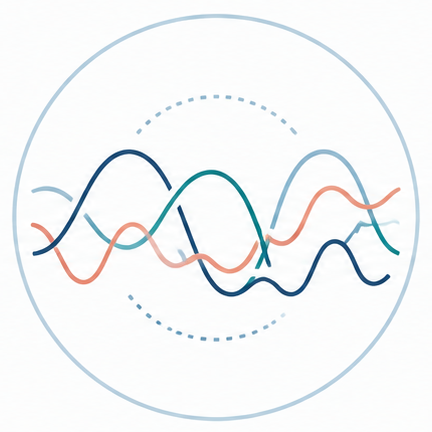
Polyrhythms in the human and the world
A polyrhythm — two or more rhythms with different periods sounding at the same time — is a basic pattern of music, and also of the body, where heartbeat, breathing and neural oscillations run nested within one another. Through entrainment, an internal rhythm locks to an external one. We ask what happens when a person entrains to several rhythms at once, whether this ability can be trained, and what such training changes in attention, motor learning and wellbeing.
entrainment · neural oscillations · nested timescales · musical training · sensorimotor coordination · wellbeing

Flow state
Flow is a state of full absorption in a task in which effort is high yet feels effortless. It is one of the most familiar states of mind and one of the least understood in terms of what the brain and the body do while it lasts. We ask which configuration of the brain–body network accompanies flow, and which conditions make it more likely to occur.
absorbed attention · effortless control · arousal regulation · optimal experience
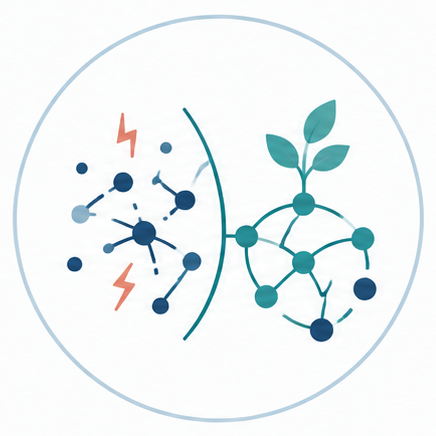
Stress and resilience
Under stress, the brain–body network reconfigures to meet the demand and returns to its previous state once the demand has passed. We treat resilience as a property of this whole network: how flexibly it reconfigures under load and how readily it recovers. We ask why this capacity differs so much between people.
allostatic regulation · recovery dynamics · network flexibility · human ecology · individual differences